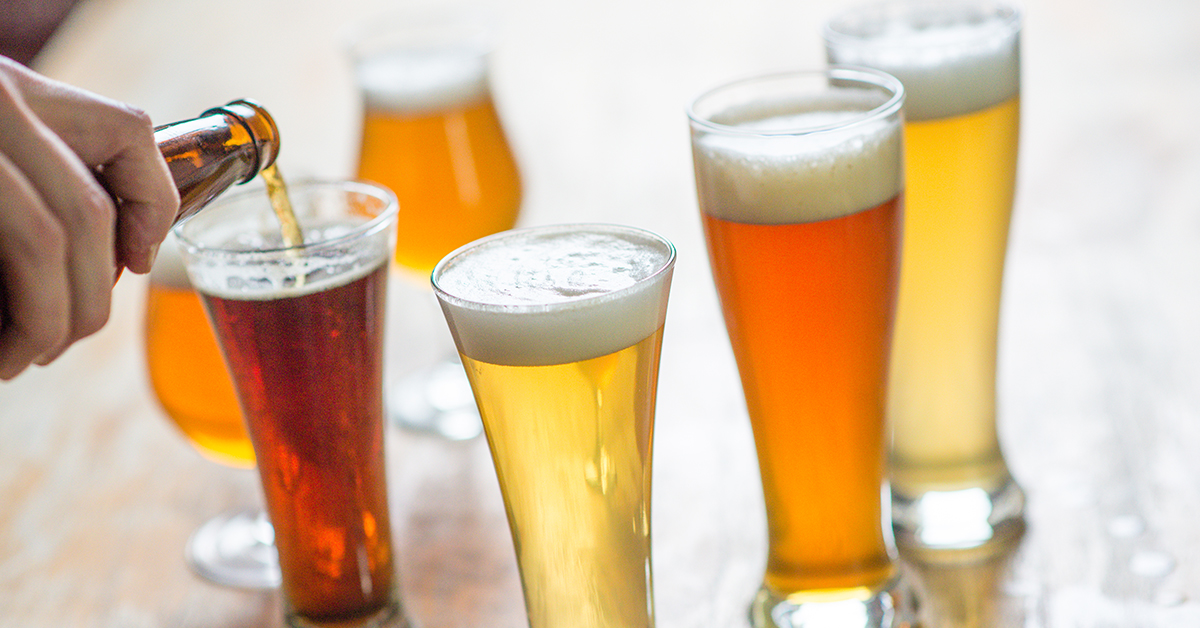
Lager beer was developed in Southern Germany around the 16th century. The use of a yeast strain adapted to cold temperatures and notable because yeast cells remain at the bottom of the wort gave rise to the term “bottom fermented.” Extended cold-aging produces a smooth, clean flavor profile emphasizing both malt and hops.
Pale Lagers
This family of beers share a pale color and lager heritage, but differ in their hop/malt balance and in the qualities of the aroma hops used. US craft versions tend to be similar to the original styles, but can be slightly bolder in flavor. The first pale lager was developed in the mid-1800s in Pilsen, Czech Republic, from which the name ‘pilsner’ was derived. Still popular today, the Bohemian pilsner is characterized by hints of caramel balanced with aroma and bitterness from the distinctive native Saaz hop. Mimicking this crisp style, the Germans created the German pilsner which is similar to the Bohemian version but with a less-pronounced hop character. The use of German noble Hallertau hops accounts for the difference.
Beer COLOR
The range is shown by graduated color in glasses.
HOPS
The size of the green dot indicates the intensity of hop bitterness and/or aroma.
BODY
The size of the gray dot indicates fullness and/or sweetness.
|
|
FLAVOR |
ABOUT |
QUALITIES |
WINNING EXAMPLES |
![]() |
|
||||||||||||
![]() |
|
||||||||||||
![]() |
|
||||||||||||
Amber Lagers
This category encompasses a number of specialty beers, most emphasizing malt over hops. Amber lagers are especially versatile beers to pair with food. The first amber lager was produced in Austria and is known as the Vienna style. It has a malty aroma and light body with a slight hint of hop aroma and flavor. The evolution of the amber lager continued in Munich when King Ludwig I of Bavaria wanted to celebrate his wedding with a hearty ‘festbier’ for his subjects. The resulting beer and celebration was christened, ‘Oktoberfest.’ This beer is richer and higher in alcohol than its Vienna cousin, with a malty aroma and a slight caramelly taste. Märzens are another of the amber lager styles. These beers are traditionally brewed in the month of March—from which the beer gets its name and lagered (aged) until September. This is a, maltier beer than the Vienna lager and has a toasty finish. American craft brewers created an amber lager style of their own style with more hop flavor and aroma than the traditional German versions.
|
|
FLAVOR |
ABOUT |
QUALITIES |
WINNING EXAMPLES |
![]() |
|
||||||||||||
![]() |
|
||||||||||||
![]() |
|
||||||||||||
![]() |
|
||||||||||||
Dark Lagers
This small family of malty lagers includes beer of varying caramel/toasty/roasty profiles and subtle hopping. Dark lagers were much more popular a hundred years ago although they still have a following. The original Bavarian-style lager is known as the Munich dunkel, or “dark”. This is a smooth, soft and malty beer with a full body and gentle, roasty finish. Schwarzbier is a roasty-malty lager that many consider a German version of the porter. The style features a pleasant roasty nose, moderate body, and an enjoyable chocolaty bittersweet finish.
|
|
FLAVOR |
ABOUT |
QUALITIES |
WINNING EXAMPLES |
![]() |
|
||||||||||||
![]() |
|
||||||||||||
Bock (Strong Lagers)
These strong, springtime lagers were said to have been produced, initially, as a way to sidestep fasting by German monks. Bocks are strong and malty, and often fairly sweet. Maibocks are an amber colored strong lager with a smooth, malty flavor profile. Traditionally brewed in May, this is the most common type of bock. The ruby colored version is simply called bock. It has a strong malty aroma and flavor with roasty flavors. A doppelbock (or double-bock) is characterized by a massive caramelly aroma and toasty bittersweet finish. Breweries traditionally name their doppelbocks with an “ator” at the end, such as Salvator.
![]() |
|
||||||||||||
![]() |
|
||||||||||||
![]() |
|
||||||||||||
Beer Color
The range is shown by graduated color in glasses.
HOPS
The size of the green dot indicates the intensity of hop bitterness and/or aroma.
BODY
The size of the gray dot indicates fullness and/or sweetness.
Last Updated: August 23, 2012